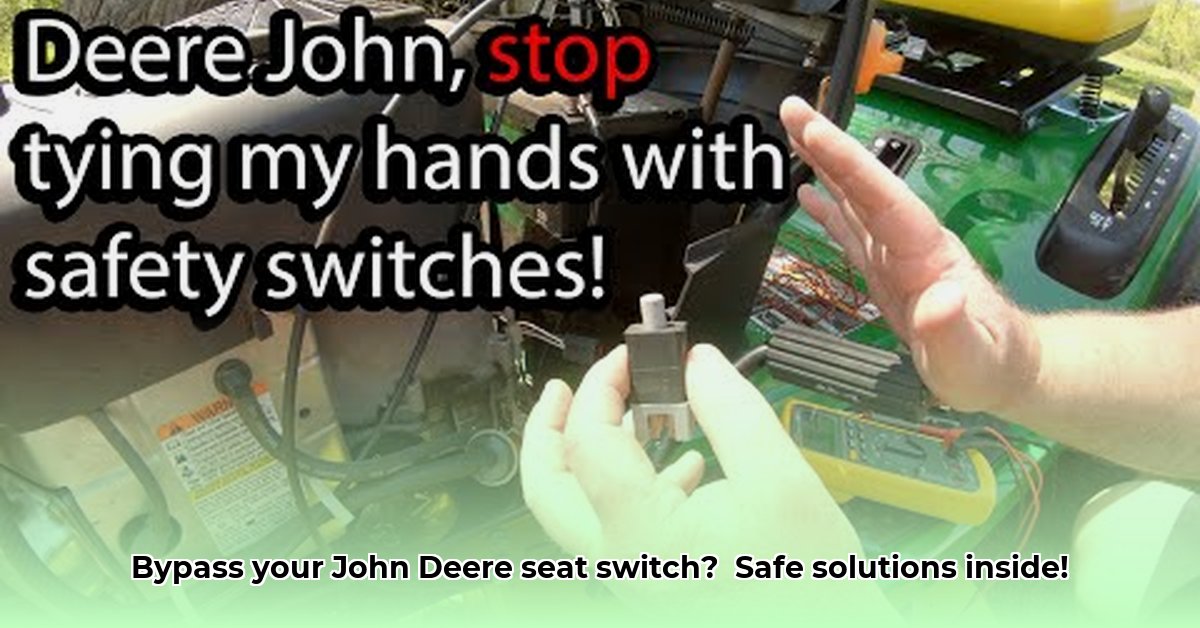
Let's be honest: a malfunctioning seat switch on your John Deere tractor is frustrating. It's tempting to bypass it, but this is incredibly dangerous. This article focuses on safe alternatives, not on disabling crucial safety features. We'll explain the risks, detail proper repair procedures, and offer preventative maintenance tips. For more on John Deere tractor seats, see this helpful resource.
The Dangers of Bypassing Your Tractor's Safety Switch
Bypassing the seat switch isn't merely inconvenient; it's a significant safety hazard. Consider these scenarios: a tractor rolling on a slope, unexpected starts resulting in run-overs, or even a sudden stop leading to serious injury. Without the switch functioning, you lose the immediate engine shutdown capability, dramatically increasing the risk of severe accidents.
Beyond physical harm, bypassing the switch exposes you to serious legal and insurance ramifications. Accidents resulting from deactivated safety features can lead to substantial legal fees and potential insurance claim denials. The cost of proper repairs pales in comparison to the potential financial and personal consequences of an accident.
Safer Alternatives: Repair, Not Bypass
Prioritize finding and fixing the root cause of the seat switch malfunction. Begin with a thorough inspection of the switch, wiring, and seat mechanism itself. Look for broken wires, corrosion, loose connections, or any other signs of damage.
If you're uncomfortable with electrical work, contact a qualified John Deere mechanic or a reputable agricultural equipment repair shop. They possess the expertise to diagnose and safely repair electrical issues, ensuring the safety mechanisms are restored to full functionality. A professional repair is an investment in your long-term safety and peace of mind.
A temporary solution should only be considered as an absolute last resort, for the shortest possible duration, and only if undertaken with extreme caution. Even then, prioritize professional repair immediately. Your safety is paramount.
Understanding the Risks: A Closer Look
The following table highlights potential scenarios and their severity:
| Scenario | Likelihood | Severity | Potential Outcomes |
|---|---|---|---|
| Tractor starts unexpectedly | High | Very High | Serious injury or death, significant property damage |
| Tractor rolls over | High | Very High | Catastrophic injury or death |
| Being run over by the tractor | Medium | Very High | Severe injury or death |
| Legal and Insurance Troubles | Medium | High | Significant legal fees, insurance claim denial |
This illustrates the critical importance of maintaining the seat switch’s functionality.
Shared Responsibility: Maintaining Tractor Safety
Preventing accidents requires the collective effort of multiple stakeholders:
- Farmers/Operators: Regularly inspect your tractor, address problems promptly, and prioritize operator training.
- Manufacturers (John Deere): Design reliable safety components, provide readily available replacement parts, and offer clear maintenance instructions.
- Regulatory Bodies: Enforce safety standards and educate farmers on safe operating practices.
- Insurance Companies: Offer fair premiums to those demonstrating a commitment to safety and proactive maintenance.
How to Safely Repair or Replace Your Seat Switch
This section details the steps involved in safely repairing or replacing your John Deere tractor's seat safety switch. Remember, attempting repairs without proper knowledge is dangerous. If unsure, contact a qualified mechanic.
- Inspect the Wiring: Check all wiring for damage, corrosion, loose connections, or breaks.
- Test the Switch: Use a multimeter (a device used to measure electrical current) to test the switch's functionality. If unfamiliar, seek professional assistance.
- Seat Adjustment: Verify the seat’s proper position and contact with the switch.
- Source a Genuine Replacement: Order a replacement switch directly from John Deere or an authorized dealer to ensure compatibility and safety.
- Consult Your Manual: Refer to your tractor's manual for wiring diagrams and detailed repair instructions.
- Professional Assistance: If uncertain about any aspect of the repair, consult a qualified mechanic.
Preventative Maintenance for Long-Term Safety
Regular maintenance is key to preventing seat switch malfunctions:
- Visual Inspections: Regularly inspect the switch and wiring for any signs of wear or damage.
- Cleaning: Keep the switch clean and free of debris to prevent malfunctions.
- Scheduled Maintenance: Schedule annual professional maintenance to ensure the switch and entire electrical system are operating correctly.
Key Takeaway: Prioritize safety. Never bypass your tractor's seat switch. Regular maintenance and prompt repairs are essential for accident prevention and responsible farm operation.